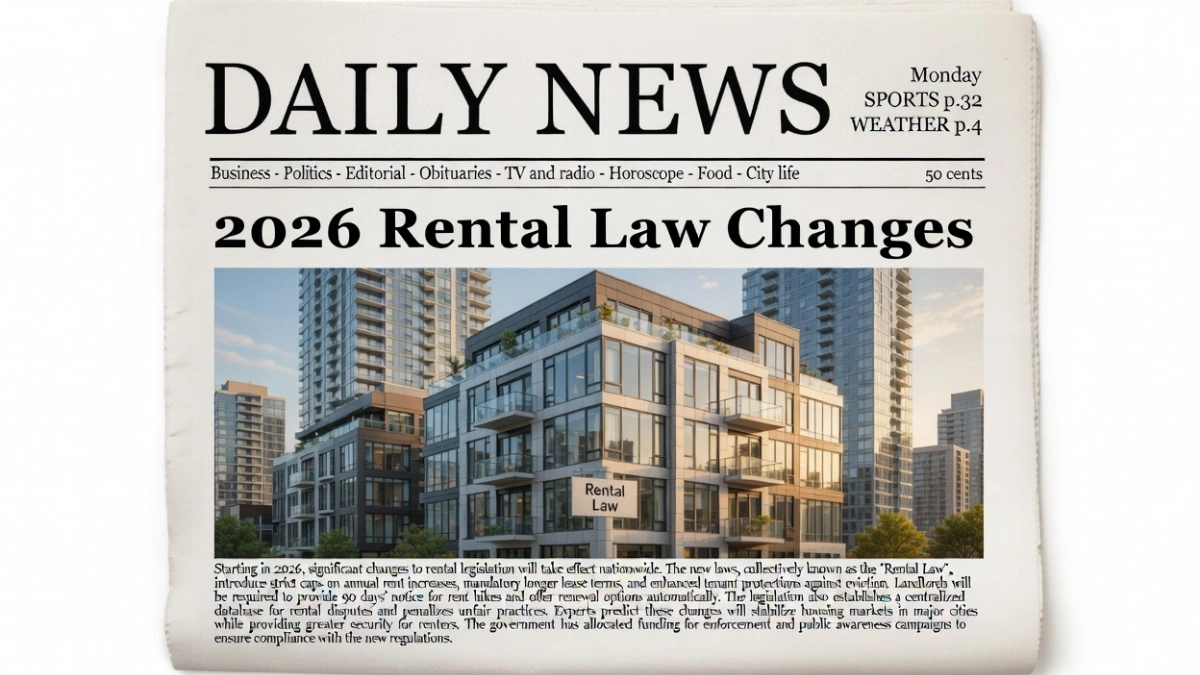
Renters across India should stay alert as several states move toward tightening rental compliance and standardizing tenancy rules in 2026. Proposed reforms focus on rent agreements, security deposits, dispute resolution, and digital registration. If you are living in a rented home or planning to sign a new agreement, understanding these changes could protect your money and your rights.
Legal Framework Behind Rental Reforms
Rental regulations in many states are being aligned with the Model Tenancy Act, 2021, which aims to balance tenant and landlord interests. While states adopt and modify provisions independently, the broader goal is to formalize tenancy contracts, reduce disputes, and improve transparency.
Mandatory Written and Digital Agreements
Authorities are encouraging or requiring written rental agreements registered through official portals. Unregistered verbal agreements may carry higher legal risk. Digital registration helps both parties establish proof of terms, duration, and agreed rent, which becomes critical during disputes.
Security Deposit Limits and Refund Timelines
One key focus area is security deposit regulation. In many proposed frameworks, deposits for residential properties may be capped at a fixed multiple of monthly rent. Clear timelines for refund after vacating the property are also being emphasized. Failure to refund within the prescribed period could expose landlords to penalties, while tenants must ensure documented handover conditions.
Rent Increase Rules and Notice Periods
Rental reforms may standardize how and when rent can be increased. Landlords may be required to provide written notice before any hike, and increases could be limited to agreed percentages within a defined period. Tenants should carefully review escalation clauses before signing a new contract.
Dispute Resolution Through Rent Authorities
States adopting structured rent tribunals or rent authorities aim to speed up dispute resolution. Instead of lengthy civil court processes, tenants and landlords may approach designated authorities for quicker decisions on eviction, deposit recovery, or maintenance issues.
Eviction and Tenant Protection Provisions
While reforms aim to protect tenants from arbitrary eviction, they also clarify grounds under which landlords can reclaim property. Non payment of rent, misuse of property, or breach of agreement terms may justify eviction through formal procedures. Understanding these conditions is essential for both sides.
Importance of Documentation and Compliance
Tenants should maintain copies of rent receipts, digital agreements, and communication records. Ensuring that Aadhaar, PAN, and other identification details match the rental agreement reduces complications. Proper documentation strengthens your position in case of future disputes.
What Tenants Should Do Now
Before signing a lease in 2026, carefully review the agreement terms, especially clauses related to deposit refund, maintenance charges, and rent escalation. Confirm whether the agreement must be registered online in your state. Seek legal advice if unclear about any provision.
Conclusion: Rental law changes in 2026 aim to bring greater structure and fairness to the housing market. While reforms may protect tenants through deposit caps and formal dispute resolution, compliance requirements are becoming stricter. Staying informed and ensuring proper documentation can safeguard your rent payments and security deposit.
Disclaimer: This article is for informational purposes only and does not constitute legal advice. Rental laws vary by state and are subject to official notifications. Tenants should consult local housing authorities or legal professionals for accurate guidance based on their region.