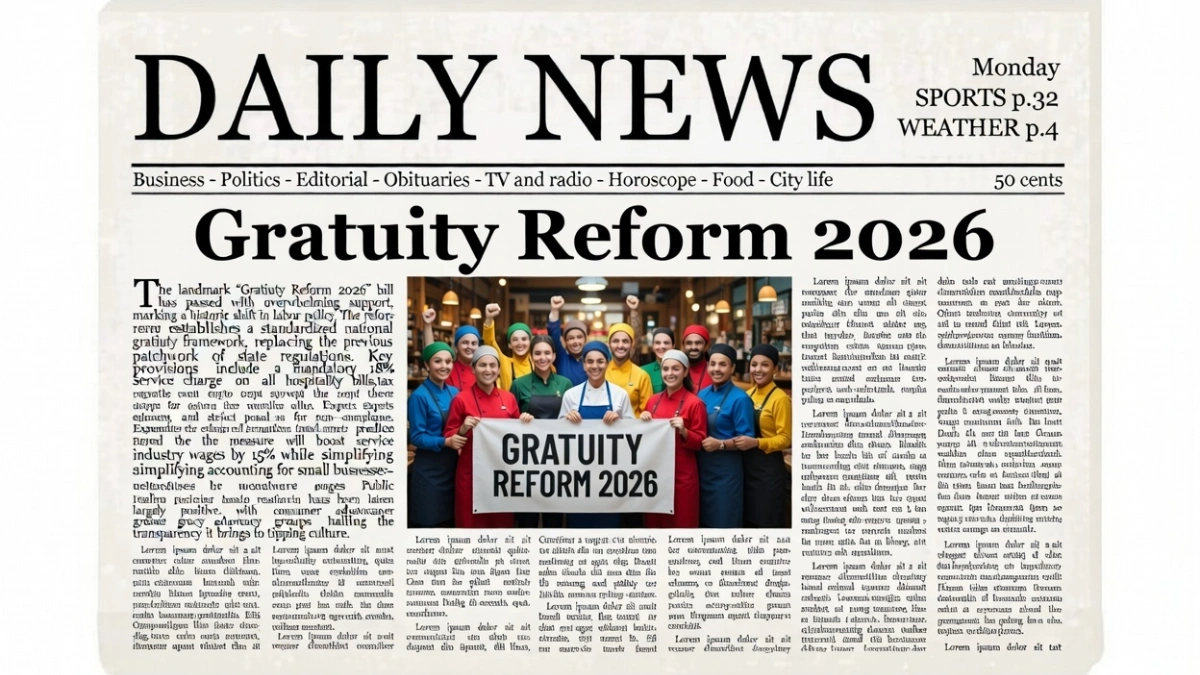
Discussions around gratuity reform in 2026 have created curiosity among salaried employees across India. With rising wages and periodic revisions in employment laws, many workers are wondering whether gratuity limits or payout formulas could see an increase. While no final notification has been issued, it is important to understand how gratuity works and what possible reforms could mean for employees.
Here is a clear explanation of the current rules and potential changes.
What Law Governs Gratuity in India
Gratuity payments are governed by the Payment of Gratuity Act, 1972. The law mandates that eligible employees receive a lump sum payment from their employer after completing at least five years of continuous service.
Gratuity acts as a retirement benefit and financial security for long term employees.
Current Gratuity Calculation Formula
Under existing rules, gratuity for employees covered under the Act is calculated using the formula based on last drawn salary and years of service. The standard formula considers 15 days of wages for each completed year of service.
There is also a maximum gratuity payout limit currently defined by government notification.
What Possible Reforms Could Include
If gratuity reforms are introduced in 2026, they could involve increasing the maximum payout ceiling, revising the calculation multiplier, or aligning gratuity rules with the new labor codes framework.
Any change in the ceiling limit would directly benefit long serving employees with higher salaries. Adjustments in wage definitions under labor codes may also influence gratuity calculations.
However, until officially notified, such changes remain speculative.
Who Would Benefit the Most
Employees with long tenure and higher last drawn salaries would benefit the most from a payout ceiling increase. Senior management and professionals nearing retirement may see significant gains if the maximum limit is raised.
Short term employees may not experience major impact unless calculation rules are modified.
What About Private Sector Workers
The Payment of Gratuity Act applies to establishments with 10 or more employees, covering most private sector organizations. Any statutory reform would apply uniformly to eligible establishments.
Employees should confirm whether their company follows statutory rules or offers additional voluntary benefits beyond legal requirements.
Is Five Year Service Rule Likely to Change
There has been discussion in the past about modifying the minimum service requirement. However, no official amendment has been confirmed as of now.
Until formal notification is issued, the five year continuous service rule remains applicable.
What Employees Should Do
Workers should maintain proper employment records and understand their salary structure, especially basic pay and dearness allowance components that affect gratuity calculation.
Staying updated with official labor ministry announcements will provide clarity if reforms are implemented.
Conclusion: Gratuity reform discussions in 2026 have raised expectations about possible payout hikes. While changes such as an increased ceiling or updated calculation formula could benefit long term employees, no official confirmation has been issued yet.
Employees should rely on verified government notifications and review their employment terms to understand how future reforms may impact them.
Disclaimer: This article is for informational purposes only and does not constitute legal advice. Gratuity laws and limits are subject to official amendments and notifications. Employees should refer to government circulars or consult HR and legal professionals for accurate guidance.