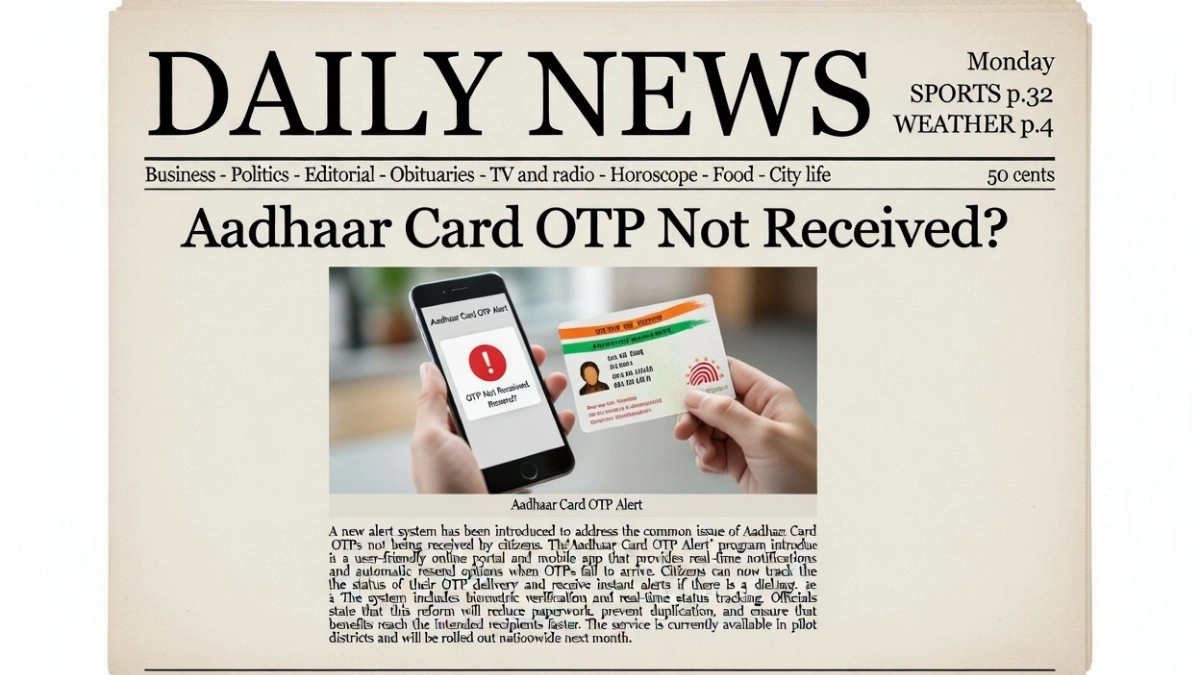
Aadhaar OTP Failure Alert 2026: If your Aadhaar OTP is not arriving or keeps failing during verification, you are not alone. OTP issues can interrupt important services such as bank verification, PAN linking, SIM registration, and government portal logins. Understanding the reasons behind Aadhaar OTP failure can help you fix the problem quickly.
Here’s a simple explanation of why it happens and what you can do.
Why Aadhaar OTP Is Important
The One Time Password is sent to your registered mobile number during Aadhaar based authentication. It acts as a security layer to confirm your identity before accessing sensitive services. Aadhaar authentication services are managed by the Unique Identification Authority of India, which ensures secure digital verification across various platforms. If the OTP does not arrive, verification cannot be completed.
Incorrect or Unregistered Mobile Number
One of the most common reasons for OTP failure is that your current mobile number is not linked with your Aadhaar. OTPs are sent only to the mobile number registered in Aadhaar records. If you recently changed your number and did not update it, you will not receive the OTP. In this case, you must visit an Aadhaar Enrollment or Update Center to update your mobile number.
Network or Signal Issues
Weak network coverage can delay or block OTP delivery. If your phone has poor signal strength, airplane mode enabled, or network congestion, messages may not reach immediately. Switching to a stronger signal area, restarting your phone, or toggling airplane mode off and on may resolve the issue.
DND or SMS Blocking Services
If your number is activated with Do Not Disturb settings or has SMS blocking features enabled, OTP messages may be filtered. Although Aadhaar OTPs are transactional messages and usually bypass DND, certain carrier settings or third party apps may block them. Checking your SMS settings and disabling message filters can help.
Server Load or Technical Glitches
During peak usage hours, such as income tax filing deadlines or subsidy registrations, Aadhaar authentication servers may experience heavy traffic. This can delay OTP delivery. Waiting a few minutes and requesting a fresh OTP often solves the issue.
SIM Not Linked Properly
If your SIM card is inactive, damaged, or recently replaced, it may affect OTP reception. Make sure your SIM is active and can receive regular SMS messages. If not, contact your telecom provider for assistance.
Multiple OTP Requests
Requesting OTP multiple times within a short period can sometimes invalidate previous codes. Always use the most recent OTP received and avoid repeatedly clicking the resend button.
How to Fix Aadhaar OTP Failure
First, confirm that your mobile number is correctly linked to your Aadhaar. Ensure you have strong network connectivity and that your SIM is active. Restart your device and clear SMS inbox storage if it is full. If the issue persists, try completing the authentication process after some time when server traffic may be lower.
If your mobile number is not linked or needs updating, visit the nearest Aadhaar Seva Kendra with valid identification documents to complete the update process.
When to Seek Official Support
If none of the above solutions work, you can contact the official UIDAI helpline or visit an authorized Aadhaar service center for assistance. Avoid sharing OTP details with anyone, as OTPs are confidential and meant only for personal verification.
Conclusion: Aadhaar OTP failures are usually caused by incorrect mobile linkage, network issues, SMS filtering, or temporary server load. Most problems can be resolved quickly by checking your registered number and network connectivity.
Taking a few simple troubleshooting steps can help you complete your Aadhaar verification smoothly and avoid unnecessary delays.
Disclaimer: This article is for informational purposes only. Aadhaar policies and authentication procedures may change. Always refer to official guidelines from UIDAI for the most accurate and updated information.